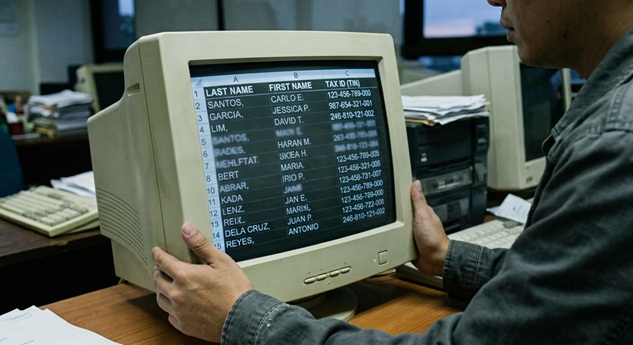
The Securities and Exchange Commission (SEC) of the Philippines has confirmed a data leak exposing personal information of users who registered on its online platforms. Furthermore, the regulator disclosed that leaked records include full names, email addresses, mobile numbers, dates of birth, home addresses and Tax Identification Numbers (TINs). This incident adds to a growing wave of data breach reports hitting Philippine government agencies in early November 2026.
What Happened: SEC Philippines Confirms Data Leak Exposing User Personal Information and Tax IDs
On November 6, 2026, the SEC Philippines became aware of online reports alleging a leak from its systems. Consequently, the regulator issued an advisory on November 7 stating it was investigating the matter while enforcing enhanced security measures.
On November 9, 2026, the SEC sent notices to affected account holders confirming the breach. Moreover, the exposed data includes full names, usernames, email addresses, mobile numbers, dates of birth, genders, addresses and Tax Identification Numbers. The regulator has formally reported the incident to the Philippines National Privacy Commission (NPC).
The SEC emphasized that it does not ask users for passwords or security PINs. Therefore, any message claiming to be from the SEC requesting such information should be treated as a phishing attempt.
Technical Details of the SEC Philippines Data Leak
The SEC has not disclosed the exact cause or initial access vector of the leak. However, the nature of the exposed data suggests a compromise of a user registration or account database rather than a targeted phishing campaign.
The following categories of personal information were confirmed exposed:
- Full names and usernames — Account identifiers tied to SEC platform registrations
- Email addresses — Primary contact details for notifications and correspondence
- Mobile numbers — Secondary contact information often used for multi-factor authentication
- Dates of birth — Identity verification data
- Genders and home addresses — Demographic and location data
- Tax Identification Numbers (TINs) — Sensitive government identifiers
The SEC has not disclosed the total number of affected users. However, the regulator confirmed it has notified impacted individuals directly.
Business and Operational Impact
Government data breaches carry unique consequences because citizens cannot simply choose a different provider. Moreover, the exposure of TINs creates long-term identity theft risk that standard credit monitoring cannot fully address.
The key impacts include:
- Identity theft risk: Exposed names, addresses, birthdates and TINs provide enough information for fraudulent loan applications, tax refund scams and account takeovers
- Phishing amplification: Attackers can craft highly targeted phishing messages using leaked SEC contact details and TINs
- Regulatory scrutiny: The NPC will likely conduct a formal investigation into the SEC’s data protection practices
- Erosion of public trust: Citizens may hesitate to use government digital services after confirmed breaches
- Cross-agency concern: Multiple Philippine government agencies have faced similar leak allegations in the same week
Mitigation and Recommendations
Immediate Actions for Affected Users
- Monitor bank statements and credit reports for unauthorized activity over the next 12 to 24 months
- Be cautious of emails, SMS messages or calls claiming to be from the SEC requesting passwords, PINs or payment
- Report suspicious contact attempts to the SEC Data Protection Officer, Oliver V. Chato
- Consider placing a fraud alert or credit freeze with credit bureaus
Actions for Organizations
- Audit user databases for unauthorized access patterns around November 5-6, 2026
- Encrypt sensitive personal data at rest and in transit
- Implement network segmentation between public-facing platforms and internal systems
- Enforce multi-factor authentication for all administrative and user accounts
- Regularly test incident response plans with tabletop exercises
Actions for Government Agencies
- Conduct a comprehensive security assessment of all citizen-facing platforms
- Adopt a zero-trust architecture for internal and external network boundaries
- Implement continuous monitoring and threat detection across all systems
- Establish clear breach notification timelines that exceed minimum regulatory requirements
Bottom line: The SEC Philippines data leak confirms that even regulators handling sensitive citizen data remain vulnerable to compromise. Furthermore, the exposure of Tax Identification Numbers creates persistent identity theft risk that requires sustained vigilance from affected individuals and stronger data protection mandates across government agencies.
Incident Summary
| Incident: | SEC Philippines Data Leak |
| Disclosure Date: | November 7, 2026 (advisory); November 9, 2026 (confirmed) |
| Affected Organization: | Securities and Exchange Commission of the Philippines |
| Exposed Data: | Full names, usernames, emails, mobile numbers, DOB, gender, addresses, TINs |
| Reported To: | National Privacy Commission (NPC) |
| Status: | Investigating; affected users notified |
References
- SEC Philippines, “Advisory on Data Security Incident,” Facebook post, November 6, 2026, https://www.facebook.com/PhilippineSEC/posts/1584661087038699, accessed November 9, 2026.
- Fintech News Philippines, “SEC Reports Data Leak That Exposes Names, Contact Details and Tax IDs of Platform Users,” November 9, 2026, https://fintechnews.ph/74327/security/sec-data-leak-philippines-users-tin/, accessed November 9, 2026.
- Context.ph, “SEC, BIR Probe Alleged Leaks of Corporate, Taxpayer Data,” November 8, 2026, https://context.ph/2026/11/08/sec-bir-probe-alleged-leaks-of-corporate-taxpayer-data/, accessed November 9, 2026.
- Back End News, “NPC Verifies Data Leak Claims Involving Government Agencies,” November 6, 2026, https://backendnews.net/npc-verifies-data-leak-claims-involving-government-agencies/, accessed November 9, 2026.
- PhilstarTech, “Philippines Nov. 5 Data Breach: Government Agencies 2026,” November 5, 2026, https://philstartech.com/news/2026/11/05/20296/philippines-nov-5-data-breach-government-agencies-2025/, accessed November 9, 2026.