WP Maps Pro CVE-2026-8732: Critical WordPress Admin Bypass Under Active Exploit
A critical vulnerability in the WP Maps Pro WordPress plugin is now under active exploitation. Threat actors are abusing CVE-2026-8732 to create rogue administrator accounts on compromised websites without any authentication.
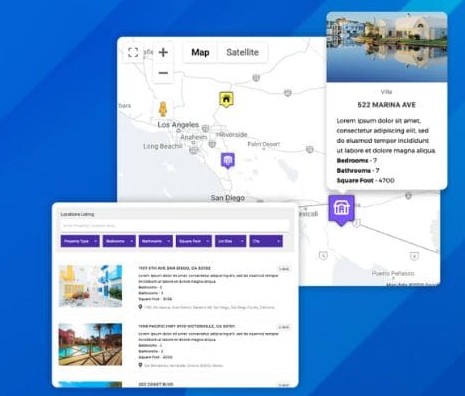
WP Maps Pro is a premium interactive map and store locator plugin sold on the Envato Market. It has over 15,800 sales and is used by businesses, real estate sites, travel portals, and directories. Consequently, the attack surface is broad and the impact of full admin compromise is severe.
What Happened: WP Maps Pro CVE-2026-8732 Enables Unauthenticated Admin Account Creation
Security researcher David Brown discovered a dangerous flaw in WP Maps Pro versions 6.1.0 and older. The vulnerability exists within a “temporary access” feature designed to let vendor support staff log into customer sites for troubleshooting.
The plugin exposes an AJAX endpoint that triggers user creation with the hardcoded role of administrator. Moreover, the endpoint relies solely on a publicly exposed nonce check in frontend JavaScript. Brown found that this nonce was trivial to obtain, rendering the protection entirely ineffective.
Defiant’s Wordfence security team observed active exploitation in the wild. Over the past 24 hours, they blocked more than 3,600 attack attempts targeting this flaw. The vendor was notified on May 16 after validation, and version 6.1.1 was released on May 20 with a fix.
Technical Details of the CVE-2026-8732 Vulnerability
The vulnerable AJAX endpoint accepts a request with a check_temp parameter. When this parameter is set to false, the plugin executes a dangerous code path.
Specifically, the function calls wp_insert_user() with the hardcoded role of administrator, a randomly generated username, and the hardcoded email address support@flippercode.com. Furthermore, it generates a “magic login URL” using generate_login_link(), stores it as user meta, and returns it in the response body.
The attacker simply visits this returned URL to gain full administrator access without a password or any secondary verification. Once authenticated, they can:
- Inject persistent backdoors into themes or plugins
- Modify site content and redirect traffic
- Access private user data and database exports
- Deploy web shells and install additional malicious plugins
- Escalate the compromise to the underlying server
The vulnerability is caused by a design flaw in the temporary access mechanism. An unauthenticated user should never be able to trigger account creation with administrative privileges through a frontend AJAX call.
Business and Operational Impact
A successful exploit grants complete control over the affected WordPress site. Therefore, the business consequences extend far beyond the website itself.
- Data exposure: Attackers can export customer databases, payment records, and private user information
- Reputational damage: Defaced websites, malicious redirects, and spam injection destroy visitor trust
- SEO penalties: Search engines may blacklist compromised sites, destroying organic traffic
- Supply chain risk: If the site distributes plugins, themes, or files, visitors may receive malware
- Compliance violations: Unauthorized access to customer data may trigger GDPR, CCPA, or PCI-DSS breach notifications
Moreover, the plugin’s 15,800+ active sales mean thousands of sites could be vulnerable if administrators have not updated. Small business owners and non-technical site operators are particularly at risk because they may not monitor security advisories closely.
Mitigation and Recommendations
Immediate Actions for Site Administrators
- Update WP Maps Pro to version 6.1.1 or newer immediately.
- Review user accounts in the WordPress admin panel for any unknown administrator accounts.
- Check for recently installed plugins, themes, or modified files that you did not authorize.
- Remove any “magic login” user meta entries or suspicious accounts associated with
support@flippercode.com. - Rotate all WordPress admin passwords and any API keys or database credentials.
Detection Guidance
- Monitor web server logs for POST requests to WP Maps Pro AJAX endpoints with
check_tempparameters - Watch for unexpected
wp_insert_usercalls in application logs - Set alerts for new administrator account creation events
- Scan for known web shell signatures and unauthorized plugin installations
Long-Term Defensive Measures
- Enable automatic plugin updates where feasible, or subscribe to vendor security mailing lists
- Implement a web application firewall with rules targeting WordPress plugin vulnerabilities
- Restrict AJAX endpoints to authenticated users unless absolutely necessary
- Conduct regular vulnerability scans and penetration tests of WordPress environments
Bottom line: CVE-2026-8732 is a textbook example of how a convenience feature can become a critical attack vector. Update WP Maps Pro immediately, audit your user accounts, and treat any unauthenticated account creation capability as a red flag.
Incident Summary
| CVE ID: | CVE-2026-8732 |
| Affected Systems: | WordPress sites running WP Maps Pro versions 6.1.0 and older |
| Disclosure Date: | May 31, 2026 |
| Patch Status: | Fixed in WP Maps Pro 6.1.1 (released May 20, 2026) |
| Severity: | Critical — unauthenticated administrator account creation |
| Attack Vector: | Frontend AJAX endpoint with bypassed nonce check |
| Exploitation Status: | Actively exploited in the wild (3,600+ attempts blocked in 24 hours) |
References
- Lawrence Abrams, BleepingComputer, “WP Maps Pro bug exploited to create admin accounts on WordPress sites,” May 31, 2026, https://www.bleepingcomputer.com/news/security/wp-maps-pro-bug-exploited-to-create-admin-accounts-on-wordpress-sites/, accessed May 31, 2026.
- Wordfence (Defiant), “15,000 WordPress Sites Affected by Administrator Account Creation Vulnerability in WP Maps Pro WordPress Plugin,” May 30, 2026, https://www.wordfence.com/blog/2026/05/15000-wordpress-sites-affected-by-administrator-account-creation-vulnerability-in-wp-maps-pro-wordpress-plugin/, accessed May 31, 2026.